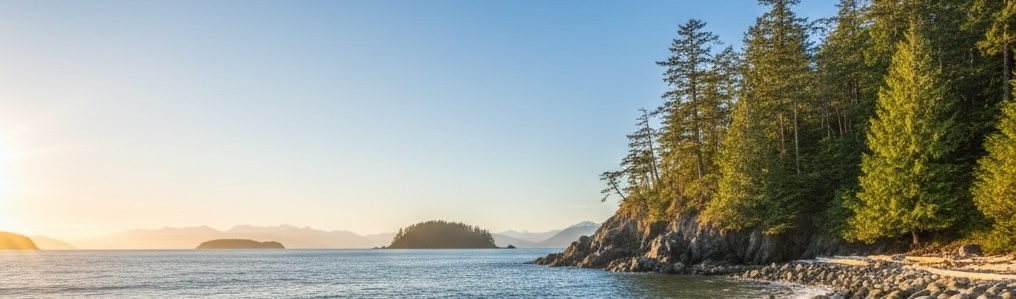
The Sunshine Coast in British Columbia is an 180 km stretch of rugged maritime landscape along the mainland's southwest coast, nestled between Howe Sound and Desolation Sound. This region includes or overlaps with the unceded territories of the Sḵwx̱wú7mesh, shíshálh, Tla'amin, Klahoose, and Homalco First Nations. The region supports rich biodiversity anchored by Coastal Western Hemlock and Coastal Douglas-fir forests.
Our PurposeThe Sunshine Coast, BC is home to a remarkable concentration of non-profit organizations dedicated to conservation and stewardship of its extraordinary biodiversity. Many of these groups run active biomonitoring programs and offer rich opportunities to learn about the coast's natural world. This website celebrates those organizations and connects community members, from Gibsons to Sechelt to Powell River, with hands-on volunteer opportunities in monitoring, conservation and education. The site also provides information on local natural history and scientific research. The site was created by Locke Rowe, Professor Emeritus, Ecology & Evolutionary Biology, University of Toronto.
Volunteer Biomonitoring and Education Opportunities
More than Biomonitoring
All of these organizations are engaged in much more than biomonitoring, community (or citizen) science, and education. Their activities range from beach clean ups to political advocacy for biological conservation, and from building fish ladders to entire biodiversity dedicated facilities. There are many volunteer opportunities for community members to be involved. Go to their websites to see their remarkable and sustained community-based work for nature.
In the News
Read about the Coast Biomonitoring Portal here.
Monitoring contributes to Research
Observations recorded by volunteers become permanent, searchable data, deposited in shared repositories where researchers across the region and beyond can access it. These data fuel peer-reviewed studies on birds, salmon, and other wildlife, their habitats, and ecological trends. By connecting citizen science directly to formal research, biomonitoring programs create evidence that can shape conservation priorities and inform the policy decisions that protect our natural environment for generations to come. Some examples of recent research on salmon, birds, and other wildlife, and local biomonitoring programs fuelling that research can be found here.
Data and Methods
Each organization's page includes a Data Repository button linking to the site where their biomonitoring data is stored and curated, and a BioMonitoring Methods button detailing their data collection procedures, where provided by the organization. These sections aim to help organizations learn from one another about current practices across the Coast — and potentially improve them with input from field experts — while also giving researchers and community members quick access to collected data. Links to other major Biodiversity Data Repositories in BC are also available here.
A data repository acts as a secure, curated and organized hub where researchers, or those otherwise engaged in biomonitoring, can store, manage, and share massive collections of data. Its primary goal is to ensure that valuable information isn't lost, but is kept "FAIR" (Findable, Accessible, Interoperable, and Reusable) so it can be consulted by interested parties and accessed by future researchers. By providing a structured and citable home for information, data repositories transform isolated data sets into a permanent, searchable resource for long-term and collaborative research and monitoring.